
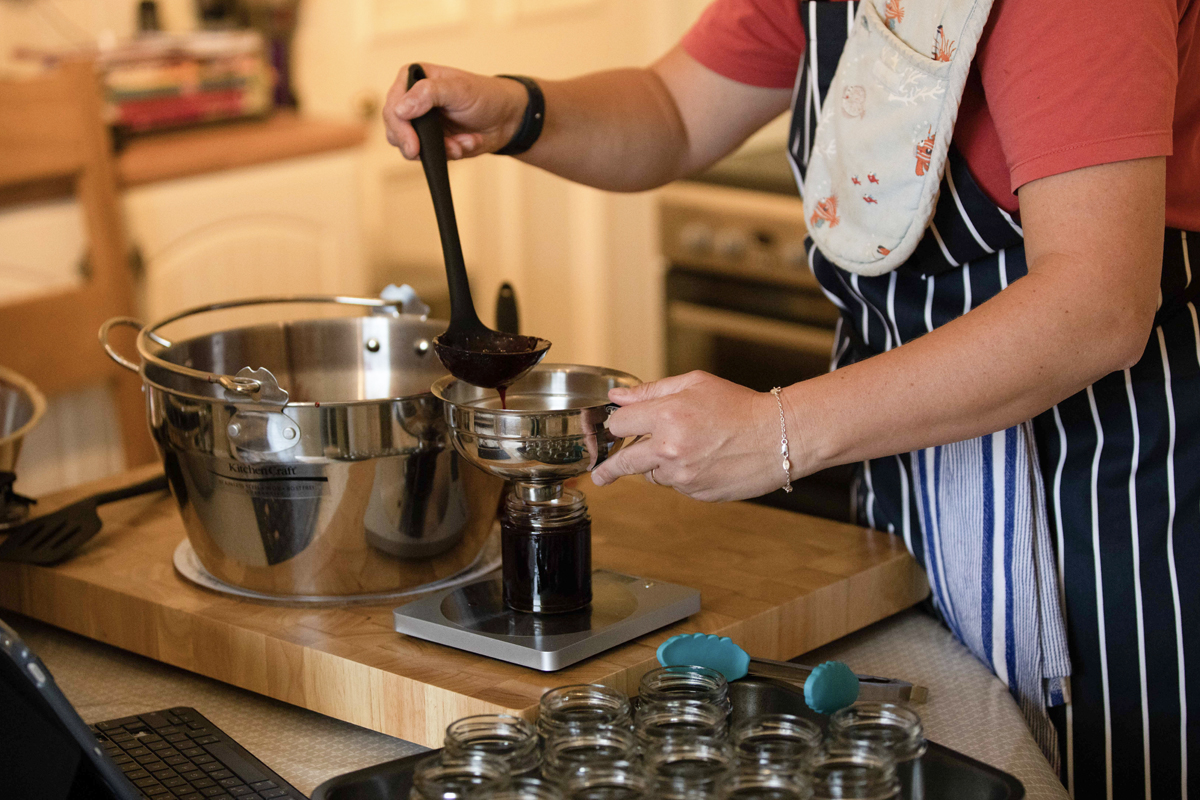
Jam making began for me when helping my mother prepare for the annual church fete in the village, held every year at the last weekend of July. We have named ‘Mrs A’s Raspberry Jam’ after her. We use the same recipe she has used for the last 50 years.
We have five delicious jams on offer at Northumbrian Pantry, all of which are made in small batches using traditional jam making methods.
The process is quite an art when you consider the importance of getting the setting temperature just right and ensuring the consistency is perfect every time.
We have created a small post about jam making and some important areas we have learned along the way.
We hope you enjoy it, best wishes Alice.

Jam Definition
Jam is the only one regulated of all the varieties in the preserve’s world. It has an enforceable definition per the Food Standards Agency.
They state in “The Jam and Similar Products (England) Regulations 2003” to legally call anything a jam the recipe must contain a minimum of 60% sugars (including natural fruit sugar and added sugar), and must contain a minimum of 35% fruit (although some fruits with lower pectin levels are allowed 25% such as our Blackcurrant Jam. A conserve is a preserve with more fruit and less than 60% sugar.
Pectin
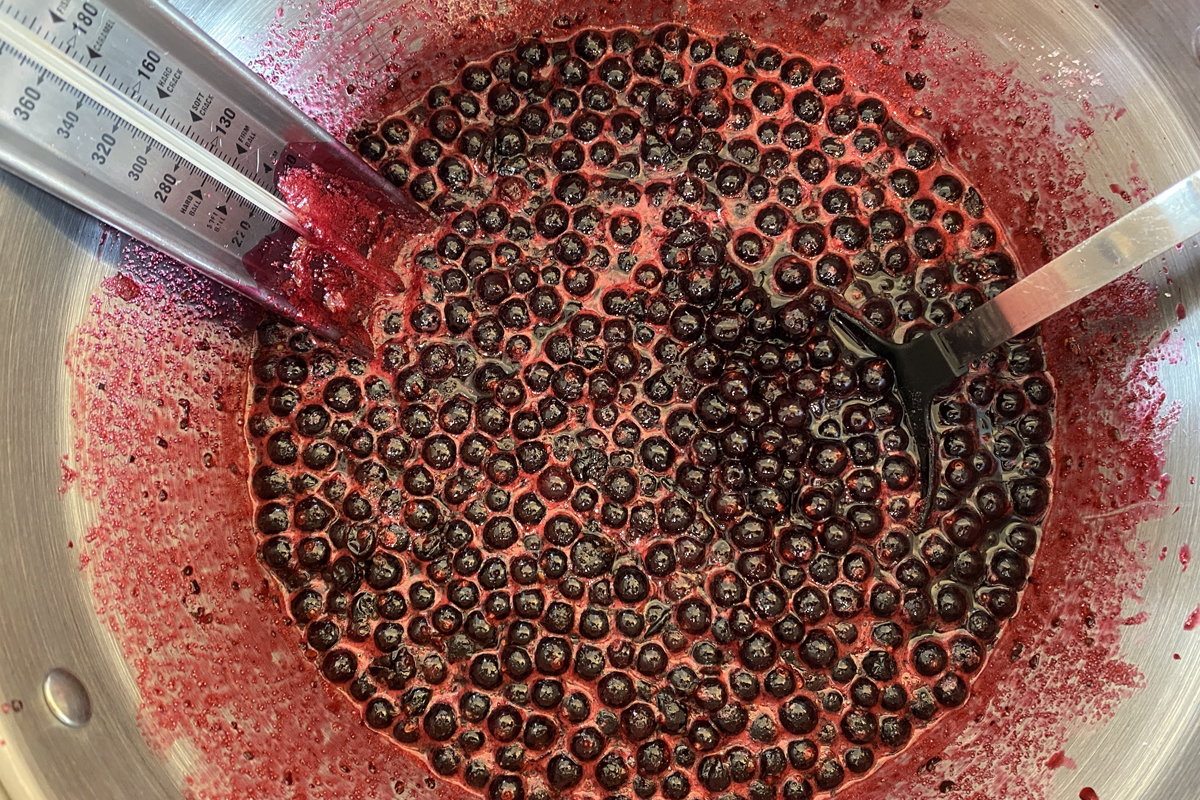
Pectin is a naturally occurring sugar with “long link chain molecules”. Under the right conditions, these molecules will bind together and form a gel-like quality that preserves their distinct jammy texture.
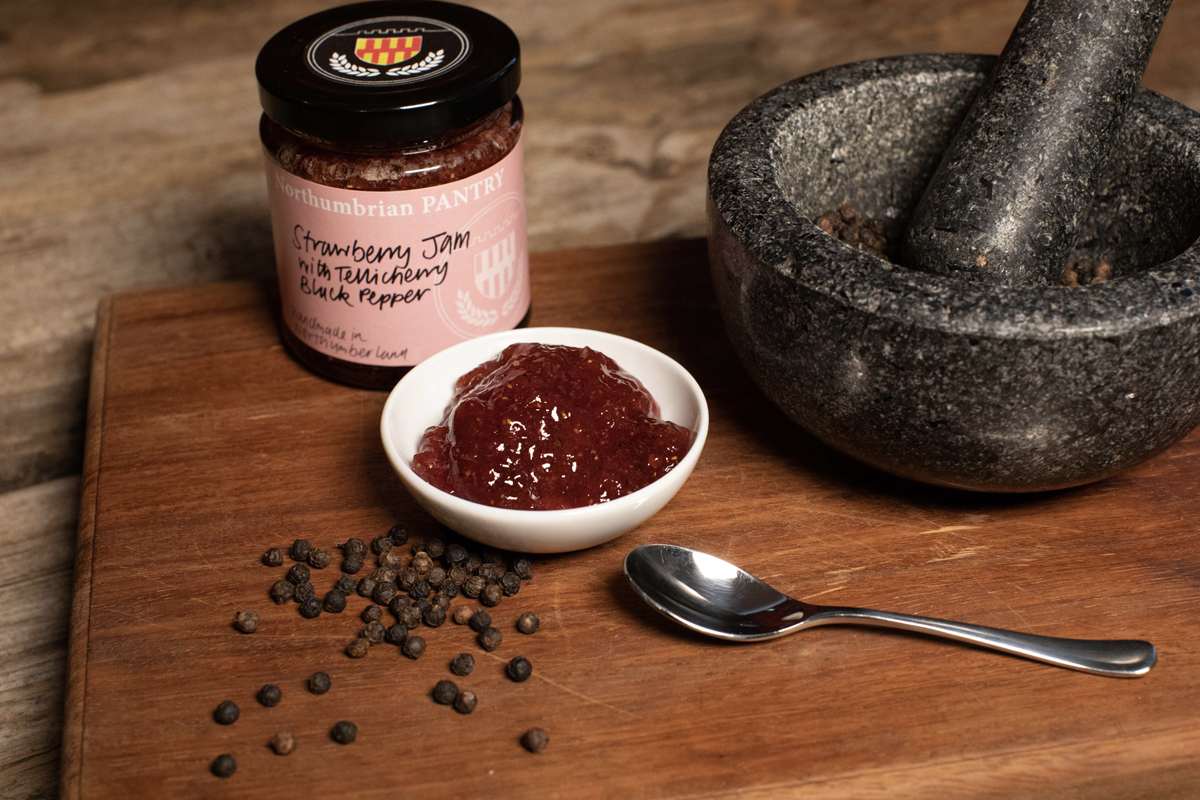
Pectin is principally found in plant cell walls, particularly in the skins, peels and cores, depending on the fruit. We use cooking apples for making ‘Mint Jelly’ as they have higher pectin levels than the berries used for ‘Mrs A’s Raspberry Jam’ or ‘Strawberry and Tellicherry Black Pepper Jam’. Our ‘Blackcurrant and Juniper Jam’ sits in the middle.
The importance of acid
We need to factor in acidity and ensure the PH is correct, roughly between 2.8 to 3.3.
As we don’t have an acidity recorder in the kitchen, this is where the art comes in. The acid is vital in allowing the long chains of the pectin to bind together.
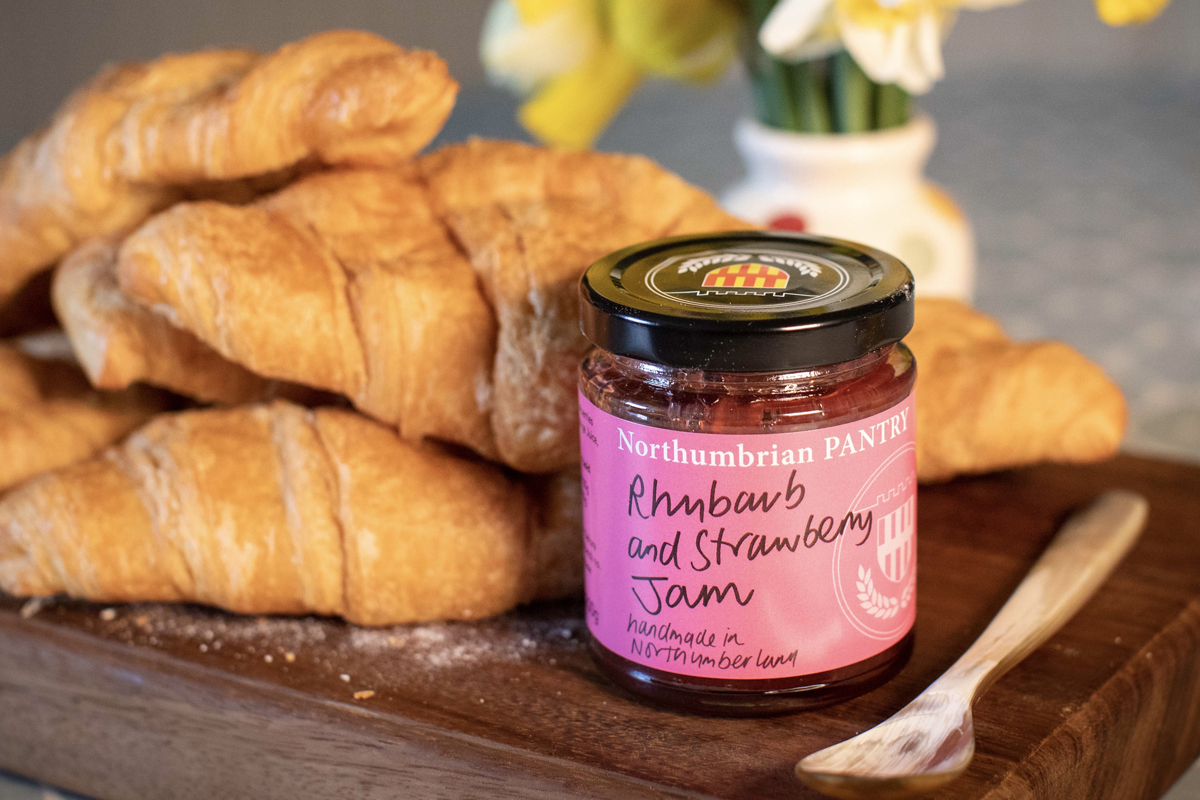
In the fruits, or in our case vegetable rhubarb, where they have a low pectin content, we add orange juice and lemon juice to provide citric acid and help bind the preserve. Without the acid, the pectin cannot gel.
Temperature – 105oC, the magic number
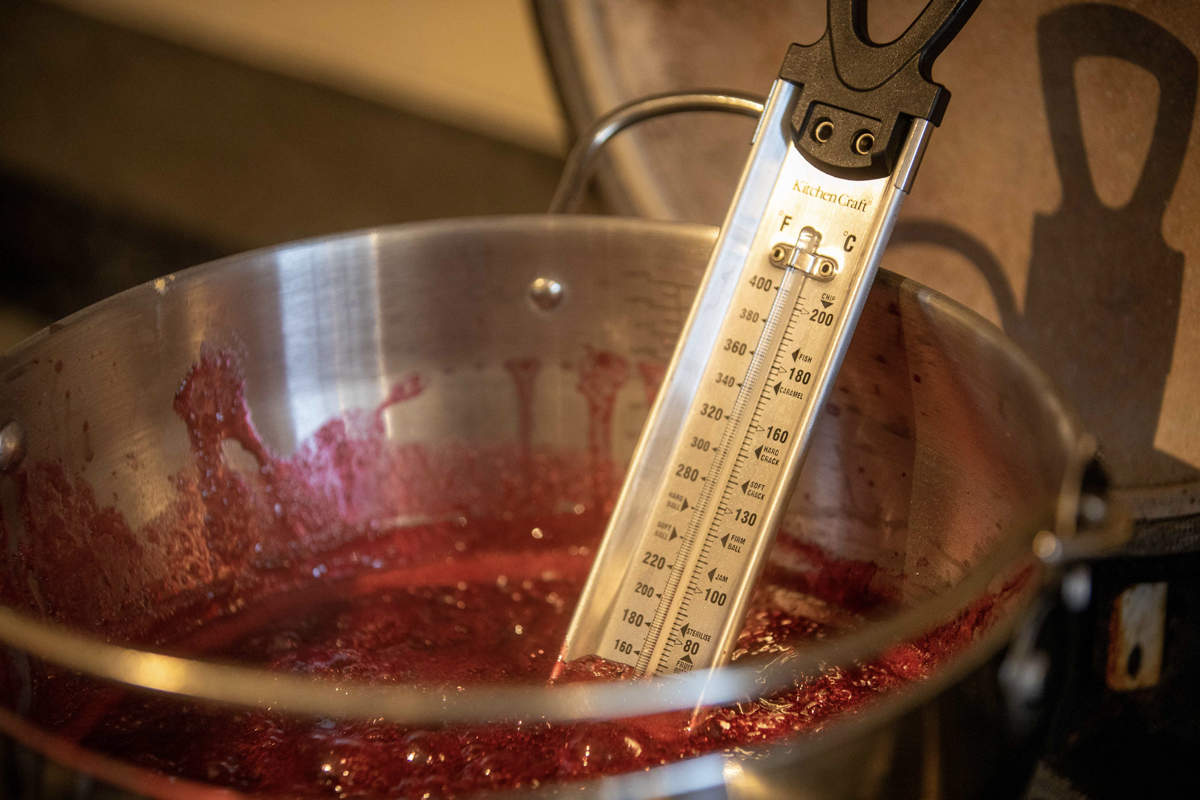
We need to boil the fruit and sugar until it reaches setting point (105oC) for the pectin to bind into a gel. A lower heat will mean a runny jam, and too much might mean catching or burning the jam. As well as using a thermometer you can use the traditional method of adding a spoonful of mixture onto a plate and placing this in a fridge to assess the stage of setting.
Sugar
The sugar in jam making plays its part in two crucial ways.
First, the sugars draw the waters away from the fruit, assisting the setting process of the pectin. Less sugar gives a softer set.
The sugar also provides a sterile environment to “preserve” the fruit. Unopened jam can last for decades.
Refractometers in Jam making
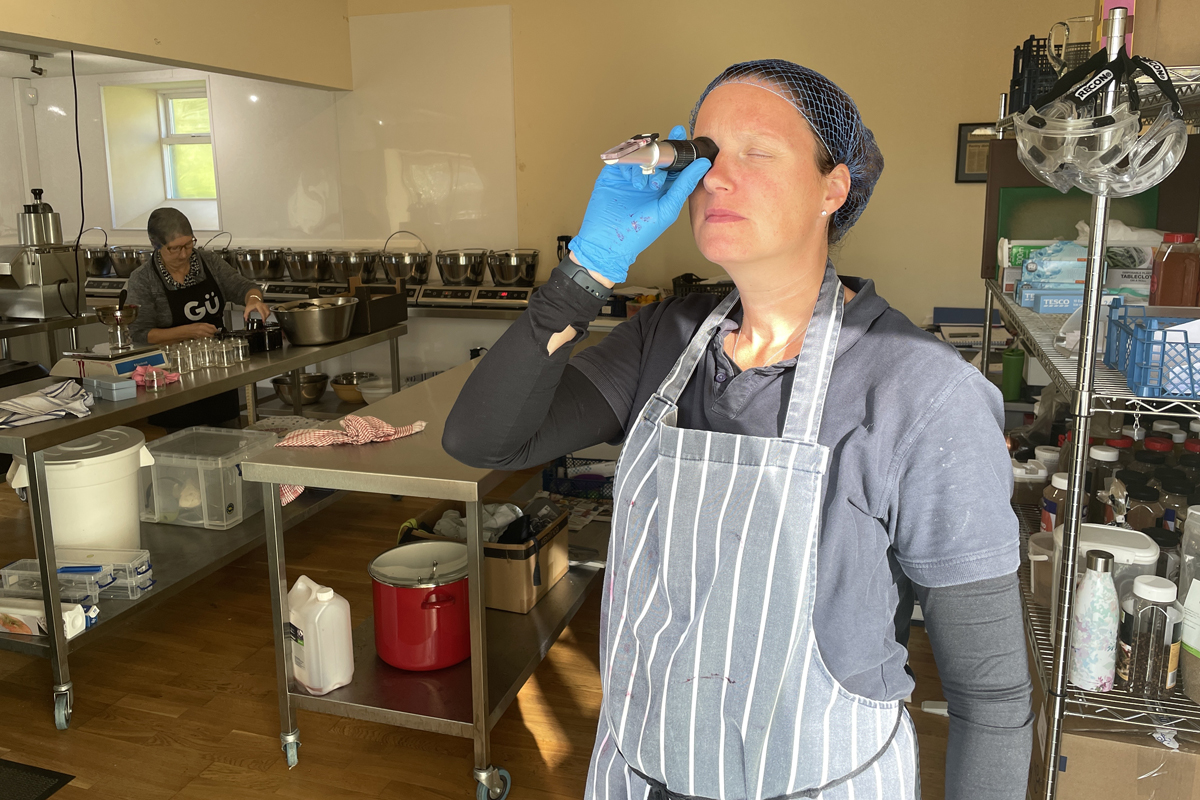
We use a refractometer to find the brix level of a jam, which is really working out the sugar content, which must be in the 60s or higher. We use this for every batch, and is an instrumental piece of kit.