
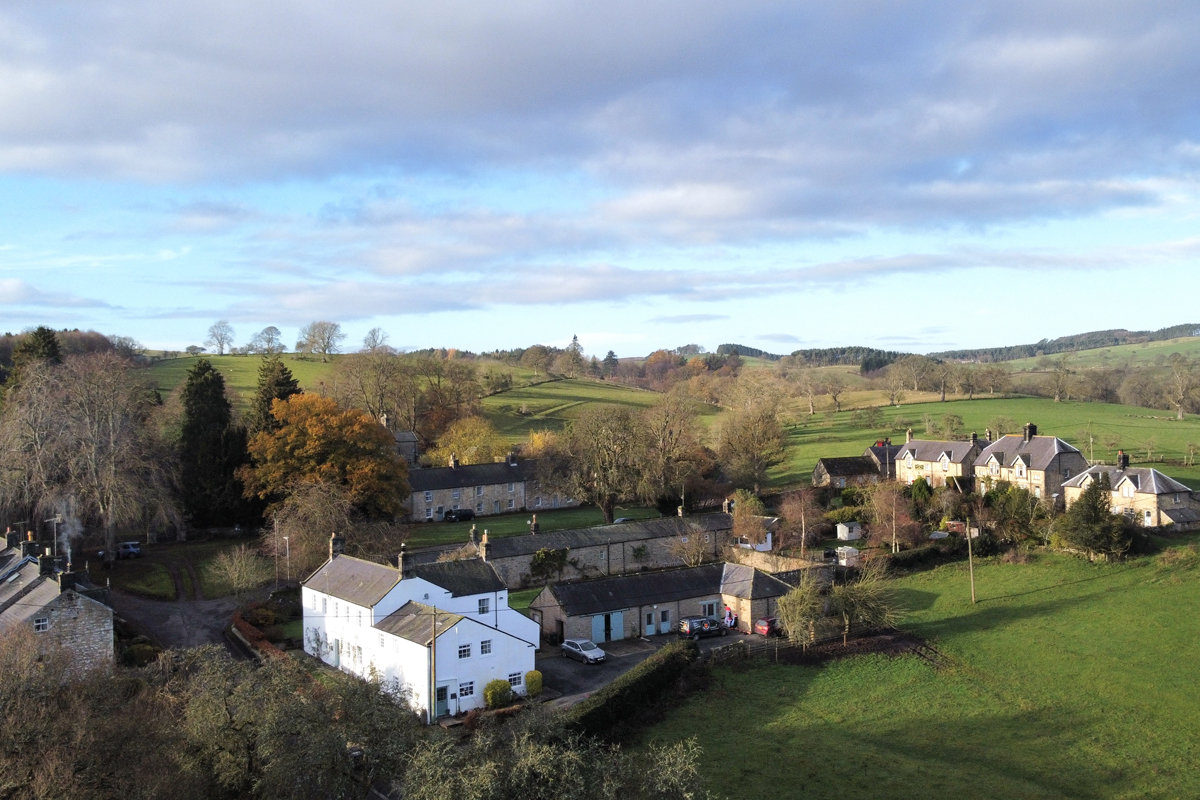
The Northumbrian Pantry kitchen is situated in the small village of Simonburn, in the heart of Hadrian’s Wall country in the North Tyne Valley. Less than 9 miles North West from the market town of Hexham, the rural village of only 20 houses is a popular tourism destination for its attractive country setting and traditional 18th-century architecture and history.
It is where I grew up, on the Nunwick Estate close to the village, and most importantly, where I got married to David in 2006 in St Mungo’s church. Simonburn and the North Tyne Valley have played a huge part in my life. They have had a considerable influence in taking me on our Pantry journey and how we are developing and growing it. With a population of only around 50 and scatterings of farms around us, it’s a very close-knit community. I’m incredibly proud to be a Simonburnite born and bred. I’m slowly but surely converting David too!
We’ve created a small article on the village’s highlights and surrounding area. If you are ever visiting the region, perhaps to see or walk Hadrian’s wall, we would highly recommend a visit to look around and, even better, to enjoy the delights of the Simonburn Tea Rooms.
St Mungo’s Church Simonburn

St Mungo’s church (where we got married) is at the centre of the village and dates back to the 13th Century. This church was built on an even older site from the 8th Century.
In medieval times the Great Parish of Simonburn was the largest Parish in England.
The building has many Northumbrian characteristics, with a western bell-cote rather than a tower, a chancel almost as long as the four-bay knave and featuring tall eastern lancet windows. It has stained glass windows by Kempe, a renowned Gothic Revival artist, as well as stone effigies and other important memorials.
The church is open and welcomes visitors from 9 am to 6 pm daily.
As a child going to church here was a regular Sunday event and quite the family tradition. My mother was a churchwarden for over 30 years. It’s a wonderful place to visit, with the most exceptional acoustics and thank goodness it even has heating these days. It’s such a peaceful, pretty place to visit anytime and sit in peace.
The Village design

Most of the village was purpose-built in the 18th Century as part of the surrounding Nunwick Estate owned by the Allgood family, and the Church built the remainder.
Much of the functioning estate is still fully intact and run by my sister Jane, with many of the village doors painted a grey blue colour to reflect this, known as Nunwick Blue. The old school is now the village hall, where many activities and fundraisers are held.
Farm

Simonburn is situated in the rural North Tyne Valley, a hilly landscape with agriculture as one of the main employers. The fields surrounding Pantry H.Q. are dotted with my sister’s special cows – the unromantically named ‘Stabilisers’! The team on the farm are a godsend as each month, our pallets of jars are delivered to them and then decanted up to our kitchen, as our access is far too tight. A particularly big thank you to Brian from the farm for all his help!
Hannah Glasse
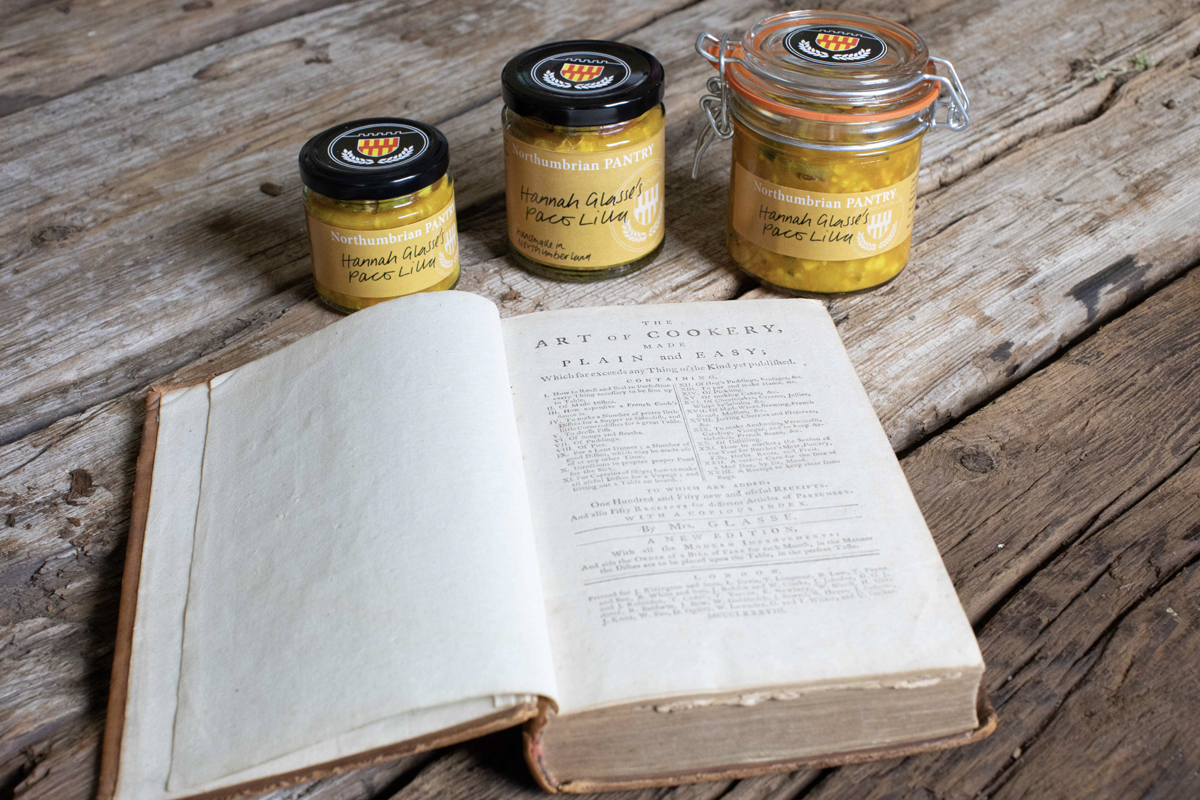
Hannah Glasse was the daughter of Isaac Allgood (my many times over Great Grandfather)! Hannah grew up with the family and went on to write the first ever popular cookery book for home cooking in the 18th Century, ‘The Art of Cookery Made Plain and Easy’, running to many editions.
A proud Northumbrian, Hannah created the first ever documented piccalilli recipe, ‘Paco Lilla’, which inspired our award-winning Paco Lilla (piccalilli).
Hannah’s book also featured the first-ever Yorkshire Pudding and jelly trifle recipes. With over 50 editions published, even George Washington had a copy, which makes Hannah Glasse one of Northumberland’s most well-known heroines.
Forestry

Along with agriculture, forestry is a significant employer in our region, with Kielder Forest slightly further up the valley from us.
Kielder is England’s largest forest and, incredibly, the biggest man-made lake in northern Europe, which was opened as recently as 1981 by H.M. Queen Elizabeth II.
It has become home to returning Ospreys, with a number of successful breeding pairs this year. We often see the birds fishing in the local waters around Simonburn.
Simonburn Tea Rooms

Simonburn Tea Rooms and bed and breakfast is at the heart of the village, with many people visiting especially to enjoy Dave and Soreya’s hospitability. We recommend that you book the B&B early, such is its popularity with the seasonal Tea Rooms returning next Spring.
The beautifully manicured tea room gardens are a wonderful place to sit outside and enjoy the view towards the rest of the village whilst being treated to Dave and Soreya’s delicious menu.
Limestone Corner

Northumbrian Pantry kitchen, and Simonburn, are situated just north of Hadrian’s Wall. We welcome many wall walkers to the village each summer.
An exciting feature close to us, pictured, is known as ‘Limestone Corner’. It is thought whilst building the wall; the Romans came across a mound of rock which happens to be very hard dolerite. Through stubbornness and refusal to divert the wall, it was decided to break through and quarry the dolerite. There is specific evidence on the rocks where wooden wedges were used to split the rock. The Northumbrian bedrock eventually defeated the Romans, however, leaving this unusual feature at the side of the wall.