
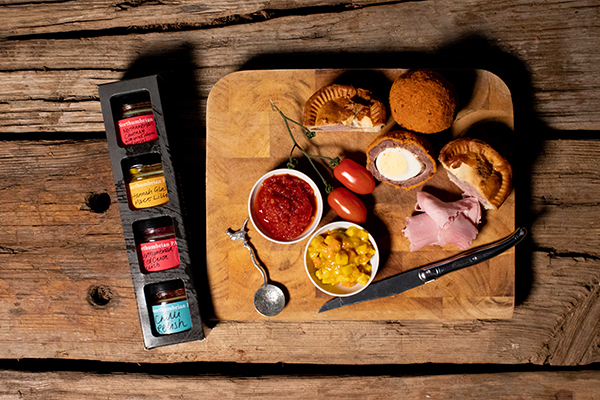
Charcuterie, a French word translated merely as ‘cooked flesh’ and covers an enormous range of wonderful foods. It is ultimately all about the preserving of meats, so this is something we truly identify with, as it is what we do with fruits and vegetables.
We define charcuterie as any meat that has been cooked, cured, smoked, pickled or air-dried to preserve it. The origins of preserving meat go back to the 3rd century with curing, or preserving using salt, central to the methodology. Very simply salt is used to draw the moisture from the meat to stop it from going off.
Charcuterie is particularly geographical with many famous regional favourites, and variations, with names that we are all very familiar with. The Salamis of Italy, Chorizos of Spain and even the Haggis of Scotland (yes we term that as charcuterie)! It seems that the locally developed methods and the names associated with them are essential throughout the world.
With fats, savoury protein, salts and also herbs central to charcuterie flavours, chutneys and relishes bring a balance to their enjoyment with the compliment of spice, fieriness, tangy and tartness. The combinations of pairings are many and genuinely down to the devourer’s preference.
Here is a quick and simple guide with frequently asked questions facts all about Charcuterie.
Hams
Ham is the most simple term for salted or smoked meat from the upper part of a pig’s leg. Growing up as a child in the UK, we identify with the cooked version of ham, perhaps in a sandwich or a special Wiltshire Ham at Christmas. An uncooked version of this would be gammon.
Jambon (France), Prosciutto and Parma (Italy) are all hams but just from a different region of the world and generally sliced more thinly than the cooked hams we know. What is critical is that they are whole meats, so not minced or processed.
Our ‘Hannah Glasse’s Paco Lilla‘ is truly remarkable with cooked hams, and in particular, gammon is a favourite of ours.
Sausages, Salamis, Pepperonis, Chorizo, Saucisson
We are all familiar with British favourite sausage meat sizzler. However, sausages are also known around the world as smoked or dried cured, such as salamis and pepperonis. But what is the real difference?
Salami hails from Italy and is cured or air-dried pork sausage. In France, they would be called saucissons. Pepperoni is very broadly an American affair and is more peppered, but can also include beef. Finally, spicier chorizos have origins in both Spain and Mexico, which is the spicier of the two. Both are made with smoked red peppers, which provides a distinct red colour.
The spicier chorizo sausage goes exceptionally well with our slightly fiery ‘Chilli Relish‘.
Pates
Quite surprisingly, Pate is a close cousin of the sausage. We love terrines in the North Tyne Valley and have a wonderful recipe (coming soon) for you to try using local game. These are best served with our ‘Spiced Apricot and Orange Chutney‘.
Pork Pies
The sausage meat spectacular encased in jelly and pastry is a real favourite of ours at Northumbrian Pantry. Records show that pies have been devoured in Britain for centuries, but the true home of our pork pies today is in the Leicestershire town of Melton Mowbray.
We’ve always wondered why the town is so famous for pork pies, and popular belief is it has something to do with Stilton. The whey from the famous blue cheese, which also comes from the region, was the perfect feed for pigs.
‘Hannah Glasse’s Paco Lilla‘ and our ‘Northumbrian Red Onion Relish‘ are our Pork Pie specialist. Both are contrasting in flavours but perfectly suited.
Scotch Eggs
This breaded sausage meat egg is very much a British favourite. For many years we believed they hailed from Scotland; however, the origins could be from many different places.
Records show they originated in Whitby, Yorkshire, England, in the 19th century, and were originally covered in fish paste rather than sausage meat. They were supposedly named after William J. Scott & Sons, a well-known eatery that sold them. Fortnum and Mason have other claims and also potential origins from the Scots Guards club in London.
Our favourite pairing with Scotch Eggs is our ‘Tomato and Red Pepper Chutney‘. The tomato goes perfectly with the egg, and red pepper is great with the sausage meat.